
The Silence of Dawn
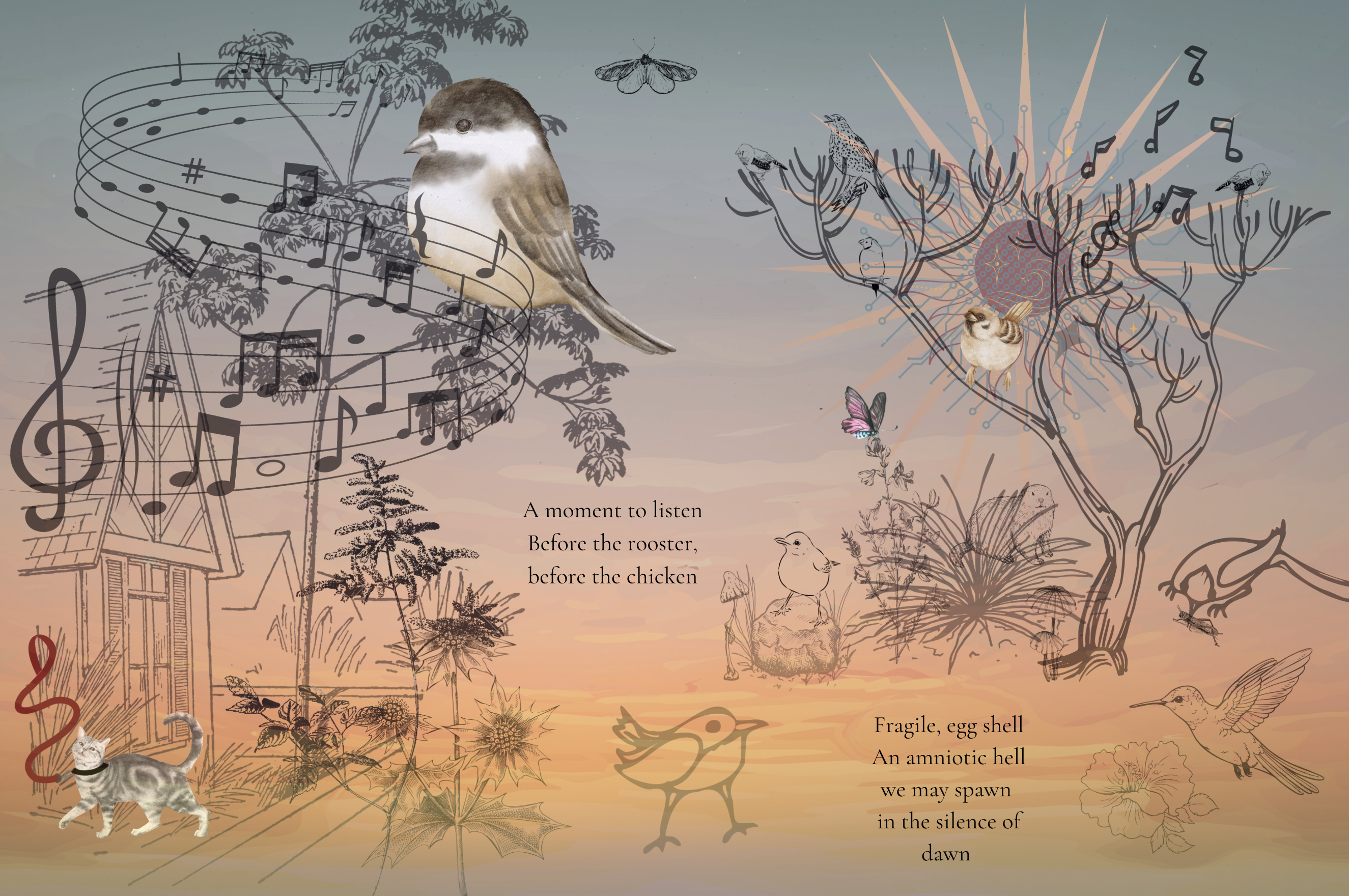
In the still, early mornings when the air is poised for the wakeful songs of the colorful Robins, Larks, Wrens, Warblers, Tits, Siskins, Finches, Thrushes, and Babblers, there is instead, now, a sober quietude. The canary in the coal mine ceases her customary chirping; the sentinel sleeps forever. The passerine, or perching bird, encompasses more than half of all bird species, making the bird song necessary to avian classification. What used to be the cacophony in twilight are now hundreds of millions of dead birds. Despite the effort of modern grassroots ecologists like Rachel Carson “Saving Our Spring”s, a comprehensive assessment of the net population of birds in the United States reveals a “staggering” decline, with common birds suffering the greatest loss of almost three billion since the 1970s. The 2019 study on the decline of North American avifauna portrays steep losses—more than one in four birds gone—across all families and respective biome and ecosystems.
“These bird losses are a strong signal that our human-altered landscapes are losing their ability to support birdlife… And that is an indicator of a coming collapse of the overall environment.” - K. Rosenberg, Cornell Lab of Ornithology
That signal is discernible from the dwindling of the dawn chorus. The dawn chorus, typically a springtime performance of twittering and warbling birds before sunrise, is a natural pattern we take for granted almost as much as the Sun rises itself. According to Adam Smith, co-author of the study, the loss is not readily conspicuous to most people as the global population experiences decline gradually, almost insidiously. Understanding the role that our avian friends, once abundant and pervading the skies, is crucial to phylogenesis and the overall preservation of entire systems. As such, the largest threat to birds are vastly from feline attacks, both domestic and feral, that are allowed to roam and kill over a billion birds annually. However, the majority of all declining species including common birds are facing habitat loss from increasing industrialization and consequent radical climate changes.
In both of these studies, a biostatistical approach is required to execute an accurate systematic review of avian mortality and the impact of anthropogenic threats, but awareness of this relationship truly resounds when it is experienced firsthand. The loss of birdsong, a deafening silence piercing the dawn. And their prey, the humble insects, no longer swarm abuzz with the same vitality. It is particularly concerning that these generalist species of birds and insects that are highly adaptable are dying en masse, strongly indicating that the environment is unsustainable for all other life. Conserving these two critical niches must be bolder and louder, as targeted efforts to increase populations of waterfowl (purchase of Federal Duck Stamps) and some endangered species have successfully recovered from adequate funding and active management and human collaboration. Besides cats, the modern human is the most invasive species on the planet capable of transforming landscapes into farmland, tall skyscrapers, or hustling highways that dulls the music of nature and lulls our ignorance of human impact to future sustainability. In both ways, we have the knowledge and agency to threaten or aid these key populations.
Next month celebrates International Dawn Chorus Day when the global serenade of birds on the first Sunday dawn of May rouses and rises us on the importance of connecting with nature and her gifts. Above all, the harmonic quintessences underlying all physical reality always presents wondrous qualities of the sheer interconnectedness of everything; coincidentally, the dawn chorus or “Earth’s Song”, the electromagnetic phenomenon that occurs in the upper atmosphere after dawn between ambient background low frequency noise and cyclotron interactions that may be converted to sounds that resemble the avian symphony! A further decomposition would then reveal identical discreet Fourier transforms found throughout nature and perhaps growing more vastly, modern systems that utilize signals. For now, as birds remain ubiquitous players and valuable indicators of ecological health, their song can be heard for this who listen and grow curious our role in nature and begin to think about the world as a network of delicate interdependent systems. With a diverse ancestry spanning over millions of years, birds are the last lineage of worlds wildly different from the Holocene, with a new host of threats driving extinction. May the light always be heralded by the chorus of nature’s finest tunes: the ensemble of life and death.
nature science philosophy poetry